

Who decides if a plant is toxic or medicinal?
Updated: Jul 31

Classifying plants as either medicinal or toxic is not always a clearcut task. For example, the Yew tree (Taxus sp.) is generally considered to be toxic, yet Paclitaxel® (Taxol®), a widely used drug for cancer treatment, is derived from the Yew tree. Deadly Nightshade (Atropia belladona) is also a toxic but pretty plant, which provides the homeopathic remedy, Belladonna. With an estimated 374,000 species of plant worldwide [1], who then decides whether a plant is medicinal or toxic ?
The definition of a medicinal plant is one that contains active chemical compounds which can be used in prevention or treatment of ailments. These compounds include alkaloids, flavonoids and terpenes. To produce a therapeutic effect, the coumpound will interact with enzymes, receptors and/or other biological targets in the body. If we take the example of Paclitaxel®, its action is to kill rapidly dividing cells [2]. Many cancers begin when genes that control how quickly cells divide, replicate and die undergo mutation. The faster a cell duplicates, the less time there is for cell repair [3]. Killing rapidly dividing cells can slow the spread of cancer, but also impacts healthy cell division. This brings us to the question of toxicity.
Paracelsus, a Swiss alchemist known as the father of toxicity, famously said « “What is there that is not poison? All things are poison and nothing is without poison. Solely the dose determines that a thing is not a poison ? » [4]. Some plants can have a toxic effect, yet, if taken in correct doses, their therapeutic action outweighs their toxicity. This concept is known as the therapeutic margin. The therapeutic margin is not just limited to plants. In general, the recommended dose of Paracetamol, also known as acetaminophen, for an adult is 3g per day. However, due to its availability and perceived safety, this common medication is responsible for more pharmaceutical overdoses than any other. This led to the creation of the Rumack-Matthew nomogram in 1975, a device to determine how likely liver injury is following paracetamol overdose [5].
Deciding on the appropriate use, dose and duration for an individual requires knowledge of multiple factors including age, weight, allergies, kidney and liver function, medical conditions, other medication taken, pregnancy or breast-feeding and the administration route. The goal, in this case, is to identify the lowest effective dose for a specific person in a specific context to minimize side effects and the risk of toxicity.
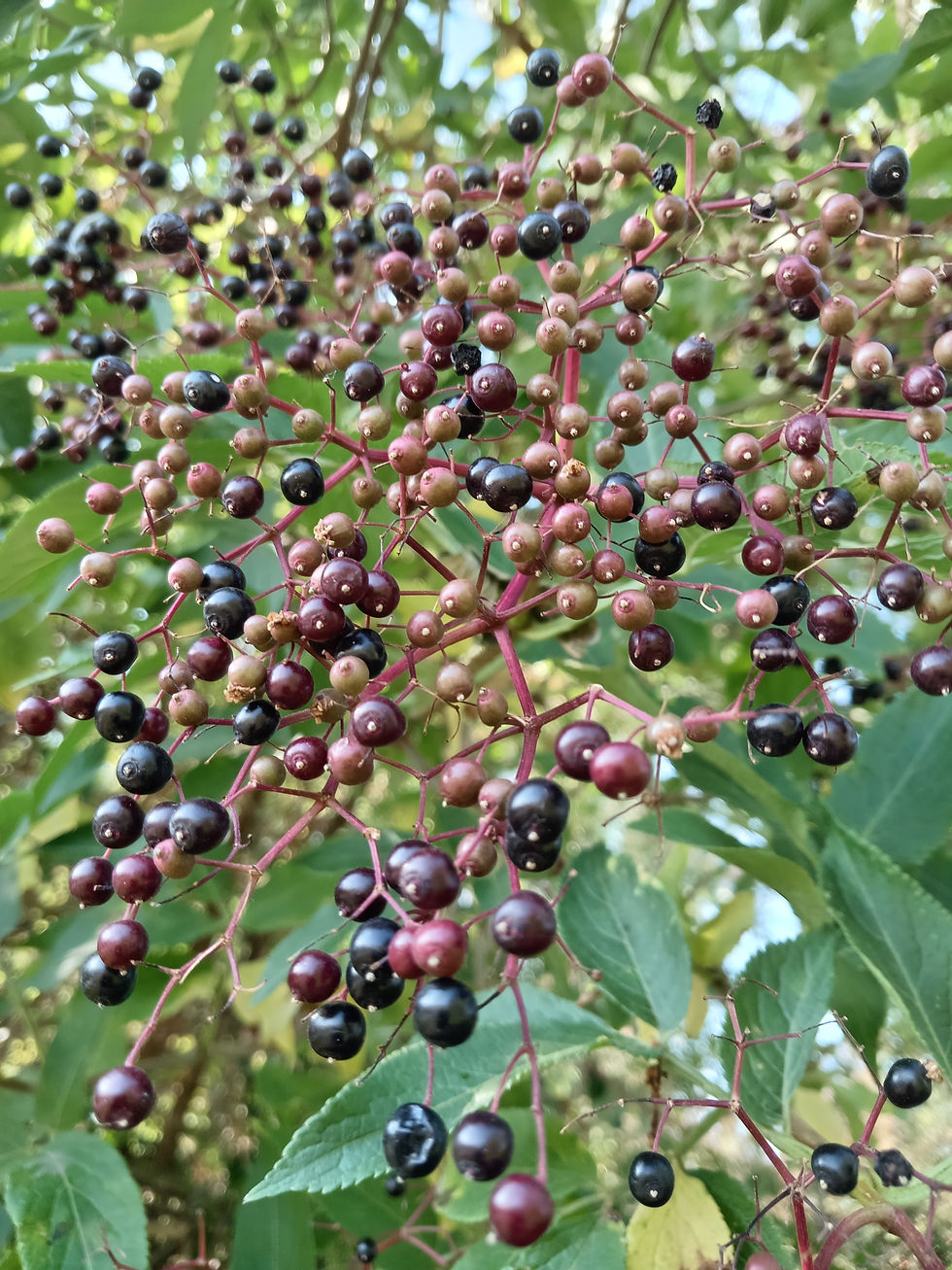
In herbal remedies, it goes without saying that it is primordial to correctly identify the plant being used. The part of the plant and the moment of harvest also play a rôle in determining toxicity. Ripe dark purple or black elderberries from the European elder (Sambucus nigra), for example, are used by herbalists to support the immune system. However, unripe green berries, as well as elder leaves, roots and stems contain high levels of cyanogenic glycosides which are potentially toxic. This is why it is important to remove the stems before using elder.
Given the above information, scientific research is essential to ascertain that the potential benefits of a plant outweighs its toxicity. Research can include the identification and biological activity of active compounds, animal studies, human clinical trials and meta-analyses and reviews. The stronger the scientific evidence, the greater the medicinal value of the plant.
Governmental agencies such as the World Health Organisation (WHO), The European Medicines Agency (EMA), the United States Food and Drug Administration (USFDA) and the UK’s Medicines and Healthcare products Regulatory Agency (MHRA) use this scientific research to determine whether products derived from a particular plant can be marketed as a medicine. These bodies do not, however, define a plant as being medicinal or toxic. They may, however, restrict the use of certain plants to qualified practitioners.
The real question, is not, therefore, who decides whether a plant is medicinal or toxic. The real question is in which context, dose, duration and form, and based on what evidence can a plant (or any other substance) be considered medicinal ?
Ultimately, herbal medicine reminds us that healthcare decisions are rarely black and white. Determining the appropriate use of a plant requires a careful assessment of an individual’s circumstances alongside traditional knowledge, scientific evidence and informed clinical judgment.
[1] Christenhusz, M.J. & Byng, J.W. (2016) The number of known plants species in the world and its annual increase. Phytotaxa 261 (3): 201–217. https://doi.org/10.11646/phytotaxa.261.3.1
[2] Gallego Jara, J. & al. A Compressive Review about Taxol: History and Future Challenges. Molecules. 25. 10.3390/molecules25245986.
[3] Cabrera, C (2023) Holistic Cancer Care, Storey Publishing, USA
[4] Grandjean P. Paracelsus Revisited: The Dose Concept in a Complex World. Basic Clin Pharmacol Toxicol. 2016 Aug;119(2):126-32. doi: 10.1111/bcpt.12622
[5] Schaffer DH, Murray BP, Khazaeni B. Acetaminophen Toxicity. [Updated 2026 Mar 26]. In: StatPearls [Internet]. Treasure Island (FL): StatPearls Publishing; 2026 Jan-.


